
Understanding the differences between warranty deeds and quitclaim deeds is essential when transferring property in Stark County because each document carries unique legal protections, responsibilities, and potential risks. Although both facilitate ownership transfers, they operate very differently, influencing how secure a buyer feels and how much liability a seller carries. Choosing the right deed helps ensure smoother, safer real estate transactions.
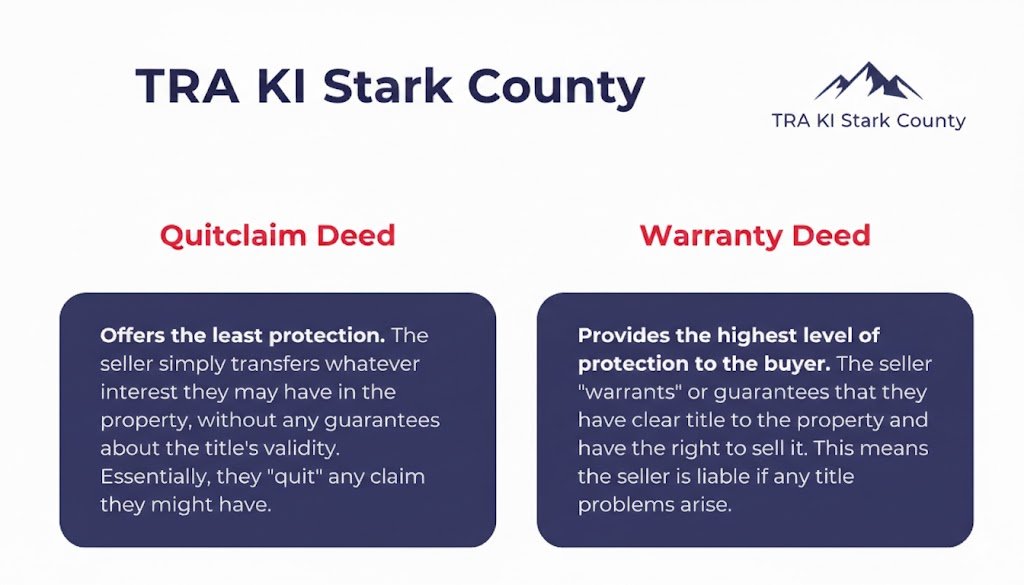
1. Level of Legal Protection of Warranty Deeds & Quitclaim Deeds
The primary difference between warranty deeds & quitclaim deeds in Stark County involves the level of legal protection they provide during property transfers. Warranty deeds offer strong assurances that the seller holds clear, marketable title, while quitclaim deeds offer no guarantees at all. These contrasting levels of protection directly influence buyer confidence, seller responsibility, and overall transaction security.
Warranty Deed Protection
A warranty deed assures Stark County buyers that the seller holds complete, undisputed ownership and will defend the title against any future claims. This protection makes the warranty deed ideal for traditional sales, mortgage-backed transactions, and investment acquisitions. Buyers receive legal confidence that hidden liens, ownership disputes, or undisclosed obligations will not arise after the deed’s recording.
Quitclaim Deed Protection
A quitclaim deed transfers whatever ownership interest the seller may hold, even if that interest equals nothing. There are no guarantees, promises, or protections, making this document riskier for buyers in Stark County. Quitclaim deeds are typically used only when trust exists between parties, such as family transfers, correcting title errors, or adding someone to existing ownership.
2. Use Cases in Stark County (Warranty Deeds & Quitclaim Deeds)
Warranty deeds and quitclaim deeds are used in Stark County for very different purposes. Warranty deeds support traditional property sales requiring high legal certainty, while quitclaim deeds facilitate low-risk transfers between familiar parties. Understanding where each deed makes sense ensures buyers and sellers choose the safest and most appropriate document for their specific real estate situation.
Warranty Deed Usage
Warranty deeds are commonly used in Stark County real estate transactions where buyers require verified ownership protection. They support mortgage lending, formal home purchases, and investor property acquisitions. Because lenders and title companies trust warranty deeds, these transactions typically involve extensive title examinations, helping ensure buyers receive fully transferable, legally secure ownership rights without unexpected obstacles or complications.
Quitclaim Deed Usage
Quitclaim deeds in Stark County typically handle simple, non-commercial transfers involving minimal risk or high trust. Common uses include adding a spouse, transferring property to children, removing an ex-partner after divorce, resolving clerical title errors, or gifting ownership. Their simplicity and speed make them useful, but the absence of guarantees means they are rarely used for traditional sales.
3. Title Insurance Requirements of Warranty Deeds & Quitclaim Deeds
Title insurance companies evaluate warranty deeds & quitclaim deeds differently in Stark County due to their varying protections. Warranty deeds offer predictable, secure ownership, which insurers prefer, while quitclaim deeds create uncertainty. These contrasting risk levels impact the cost, approval speed, and depth of title investigation required before an insurance policy can be issued for the property.
Insurance for Warranty Deeds
Title insurers favor warranty deeds because the seller guarantees clear, marketable title. This reduces the likelihood of future disputes, simplifies underwriting, and supports faster policy approval. Buyers in Stark County benefit from reduced risk, since both the deed’s warranties and the insurance policy work together to provide strong safeguards against liens, boundary issues, or unexpected title complications.
Insurance for Quitclaim Deeds
Quitclaim deeds generally require more cautious underwriting because they offer no ownership guarantees. Stark County title insurers may require additional documentation, expanded historical searches, or risk disclosures to issue a policy. Since the seller makes no promises regarding liens or previous claims, insurers must verify the property history thoroughly, which can delay approvals and increase the buyer’s potential exposure.
4. Impact on Real Estate Closings “Warranty Deeds & Quitclaim Deeds”
Real estate closings in Stark County Ohio can vary significantly depending on whether a warranty deed or quitclaim deed is used. Warranty deed closings typically involve more verification, longer timelines, and additional steps due to ownership guarantees, while quitclaim deed closings are faster but lack protective measures. The selected deed influences the entire closing process and overall transaction efficiency.
Warranty Deed Closings
Warranty deed closings require title searches, lien resolution, legal assurances, and lender coordination, which lengthens the process. Stark County buyers benefit from the extra protection, but sellers must complete more documentation to confirm clear ownership. This comprehensive approach ensures stronger security, making warranty deed closings slower but more reliable for buyers, lenders, and title insurance companies involved.
Quitclaim Deed Closings
Quitclaim deed closings are faster because there is no obligation to verify or guarantee full ownership. Stark County transactions using quitclaim deeds typically require minimal documentation and fewer formalities. However, the buyer accepts any unresolved issues, making the closing process quick but potentially risky. This approach works best when both parties trust each other and understand the limitations clearly.
5. Seller Responsibilities
Warranty deeds and quitclaim deeds impose different obligations on sellers during and after Stark County property transfers. A warranty deed requires sellers to guarantee clear ownership and defend the title if future disputes arise. In contrast, a quitclaim deed imposes almost no post-transfer responsibility, shifting all risk to the buyer and eliminating seller liability after recording.
Warranty Deed Responsibilities
Warranty deed sellers in Stark County must ensure the title is free of liens, disputes, and ownership defects before transferring the property. If a problem emerges later, the seller is legally obligated to defend or correct the issue. This responsibility provides strong buyer protection but demands thorough preparation, greater accuracy, and full disclosure from sellers to avoid future complications.
Quitclaim Deed Responsibilities
Quitclaim deed sellers have minimal legal duties, transferring ownership “as is” without warranties. Once recorded, they hold no responsibility for liens, disputes, or historical title defects. This simplicity benefits sellers in Stark County, but places the burden entirely on buyers, who must accept all associated risks. Such arrangements require trust and clear understanding between both parties.
6. Buyer Confidence in Stark County Ohio
Buyer confidence varies greatly depending on the deed used. Warranty deeds instill trust by guaranteeing ownership, making them ideal for Stark County homebuyers. Quitclaim deeds, on the other hand, create uncertainty due to their lack of protections. These differences significantly influence how comfortable buyers feel and how willing they are to proceed with specific property transactions.
Confidence From Warranty Deeds
Warranty deeds provide buyers with strong reassurance that they’re receiving fully protected ownership, backed by legal promises and title insurance compatibility. This confidence boosts buyer willingness, strengthens negotiations, and supports mortgage approvals. In Stark County’s traditional real estate market, warranty deeds remain the preferred choice because they minimize risk and help ensure smooth, transparent, and secure property transfers.
Confidence From Quitclaim Deeds
Quitclaim deeds create uncertainty because buyers receive no ownership guarantees. This lack of protection means buyers must evaluate the relationship, risk level, and property history before proceeding. In Stark County, quitclaim deeds are appropriate only when trust exists or when the purpose is corrective rather than commercial. Buyers must accept potential liabilities, making confidence lower compared to warranty deeds.
7. Lender Preferences
Mortgage lenders in Stark County strongly prefer warranty deeds because they guarantee clear title, reducing financial risks. Quitclaim deeds lack assurances, making them unsuitable for most financed purchases. These differing preferences affect whether a buyer can obtain financing, how quickly approval occurs, and whether certain transactions qualify for traditional mortgage-backed lending programs within the county.
Lender View of Warranty Deeds
Lenders support warranty deeds because they protect loan security. A guaranteed clear title ensures the property can serve as reliable collateral, reducing financial exposure. In Stark County, lenders generally require warranty deeds for conventional mortgages, refinancing, and investment loans, making this deed essential for any transaction involving institutional financing or long-term property borrowing arrangements.
Lender View of Quitclaim Deeds
Lenders rarely accept quitclaim deeds because they provide no assurance of ownership, increasing risk significantly. Most Stark County mortgage programs require clear title and formal guarantees, which quitclaim deeds cannot offer. As a result, financed purchases almost never use quitclaim deeds. These documents are primarily reserved for cash transfers, internal family arrangements, or administrative corrections without lender involvement.
8. Handling Title Defects “Warranty Deeds & Quitclaim Deeds”
Warranty Deeds & Quitclaim Deeds handle title defects very differently. Warranty deeds require sellers to clear any issues before transfer and assume responsibility for future claims. Quitclaim deeds transfer ownership regardless of defects, leaving buyers to resolve problems alone. These contrasting approaches determine how title complications are managed during Stark County property transactions.
Warranty Deeds and Title Defects
A warranty deed obligates the seller to resolve liens, ownership disputes, easements, or other title defects before completing the transfer. If any issue arises later, the seller must correct or defend it. In Stark County, this strong protection ensures that buyers receive clean, secure ownership, supported by legal remedies that create long term confidence and reduced risk.
Quitclaim Deeds and Title Defects
Quitclaim deeds transfer ownership without addressing past issues, meaning the buyer inherits all existing problems. Stark County buyers must repair defects independently, including resolving liens, correcting ownership conflicts, or addressing recording mistakes. This deed type relies heavily on trust and property familiarity, making it appropriate for simple transfers but unsuitable for complex or commercially significant real estate transactions.
9. Recording Process in Stark County
Recording Warranty Deeds & Quitclaim Deeds in Stark County follows similar procedures, but the documentation requirements and review depth may differ. Warranty deeds often require more detailed verification due to their guarantees, while quitclaim deeds undergo a quicker review. Recording ensures public acknowledgment of ownership changes, protecting both parties after the transfer is completed.
Recording Warranty Deeds
Warranty deeds may require additional supporting documents before Stark County will record them, including legal descriptions, seller confirmations, and notarized signatures. The county must verify all information carefully due to the deed’s guarantees. This thorough oversight helps preserve accurate public records and ensures the transfer reflects legally enforceable ownership, offering buyers increased reliability and documented protection.
Recording Quitclaim Deeds
Quitclaim deeds typically move through the Stark County recording process faster because they involve fewer legal guarantees. As long as the deed meets basic formatting, identification, and notarization requirements, it is recorded without the deeper analysis required for warranty deeds. This simplified approach benefits quick transfers but does not add any legal protection to the transaction itself.
10. Suitability for Different Situations
Warranty Deeds & Quitclaim Deeds serve different purposes depending on the transaction’s nature. Warranty deeds are ideal for commercial sales, financed purchases, and transactions requiring full ownership protection. Quitclaim deeds are best for family transfers or administrative corrections. Selecting the right document helps ensure secure, predictable, and appropriate property transfers across Stark County’s diverse real estate market.
When Warranty Deeds Are Best
Warranty deeds work best in Stark County real estate situations requiring verified ownership, such as traditional home sales, refinancing, or investor acquisitions. These deeds provide maximum protection for buyers and lenders, ensuring legally secure title transfers. Their guarantees make them essential when financial institutions are involved or when parties require confidence that no hidden ownership problems exist.
When Quitclaim Deeds Are Best
Quitclaim deeds are ideal for low-risk transfers between trusted parties, including family gifting, removing a spouse after divorce, updating ownership details, or correcting administrative errors. In Stark County, they offer speed and simplicity but no protection. Because they transfer only available interest, these deeds should be used cautiously and only when both parties understand the limitations clearly.
Conclusion
Choosing between a Warranty Deeds & Quitclaim Deeds in Stark County depends on the level of protection needed. Warranty deeds provide strong ownership guarantees, making them ideal for traditional sales, while quitclaim deeds support simpler, trust-based transfers. Understanding these differences helps buyers and sellers avoid problems, safeguard investments, and complete property transactions confidently and efficiently.
FAQs
1. Which deed is safer in Stark County?
A warranty deed is significantly safer in Stark County because it guarantees full ownership, protects against liens, and ensures the seller will defend the title if problems arise. Buyers receive strong legal assurance and greater long-term security. In contrast, a quitclaim deed offers no guarantees, making it far riskier except in trusted or family-based transfer situations.
2. Can I use a quitclaim deed to sell a home?
Although you technically can use a quitclaim deed to sell a home in Stark County, it is extremely uncommon because buyers and lenders require ownership guarantees. Most traditional real estate transactions rely on warranty deeds for legal protection and financing approval. Quitclaim deeds are best suited for family transfers, corrections, or non-commercial ownership updates where trust already exists.
3. Are quitclaim deeds legally valid in Stark County?
Yes, quitclaim deeds are legally valid in Stark County and commonly recorded for family transactions, gifting property, or correcting administrative errors. However, their lack of ownership guarantees means they should not be used for traditional sales. Buyers accept all risks, making quitclaim deeds appropriate only when the parties understand their limited protections and the transfer involves minimal financial exposure.
4. Do warranty deeds guarantee a perfect title?
A warranty deed does not guarantee a perfect title, but it guarantees that the seller will defend the buyer against any issues that arise. It assures buyers that the seller believes the title is clear and marketable. Combined with a title search and insurance, a warranty deed provides strong protection, making property transfers in Stark County more secure and reliable.
5. Do both deeds need to be recorded?
Yes, both warranty deeds and quitclaim deeds must be recorded with the Stark County Recorder to make ownership legally official. Recording protects buyers by establishing public notice of the transfer and preserving the property’s history. Without recording, disputes or confusion may arise later. Proper filing ensures the deed becomes part of the county’s permanent property records.


